




 June 17, 2026, 12:30 pm
 105 Enrolled

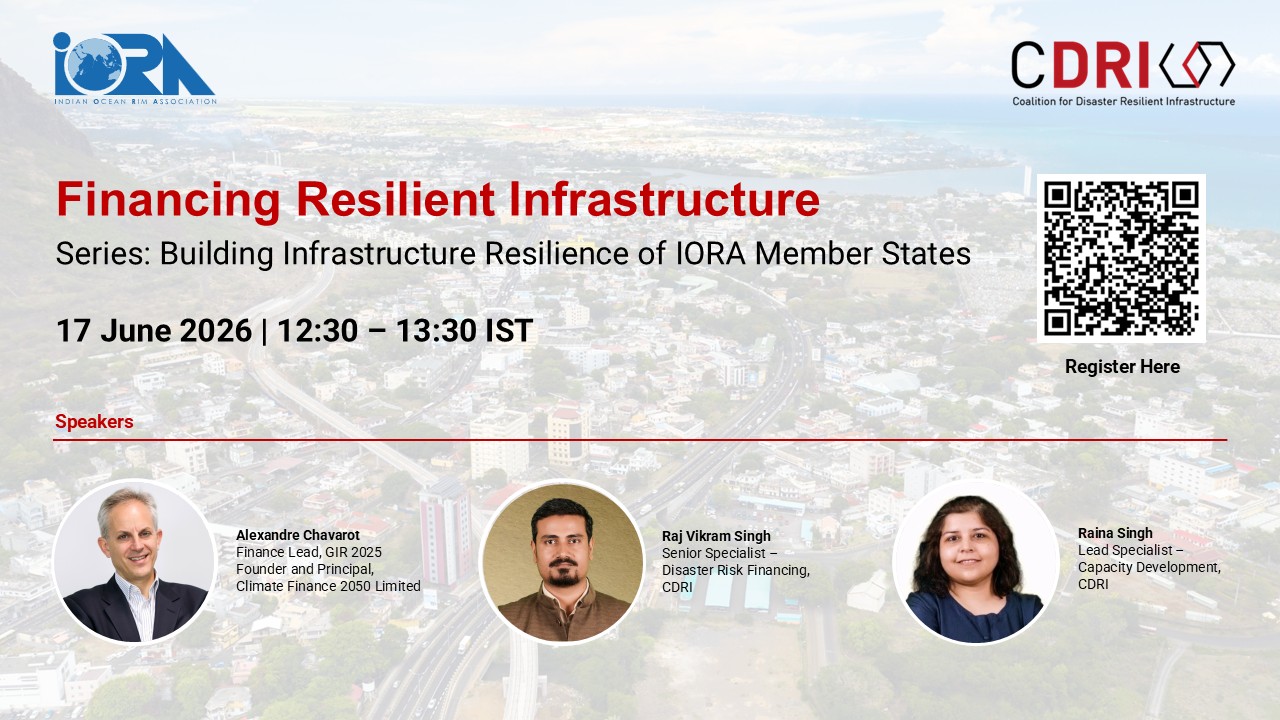
Financing resilience requires a new generation of innovation—one that moves beyond short-term recovery models and toward proactive, long-term adaptation strategies. This transformation depends on integrating rigorous risk assessment, advanced financial instruments, and strategic planning frameworks that align investment flows with the realities of climate vulnerability and development needs. Traditional financing mechanisms are often reactive, fragmented, and insufficient to address the scale of environmental and socio-economic risks facing communities worldwide. A resilience-centered financial approach, by contrast, recognizes adaptation as both a protective necessity and a catalyst for sustainable growth.
At the core of this shift is the ability to connect data, technology, and governance into a unified system of decision-making. Accurate climate data, predictive analytics, and digital monitoring tools can provide governments, investors, and institutions with deeper insights into emerging risks and infrastructure performance. When supported by transparent governance structures and accountable policy frameworks, these tools enable more informed investments that reduce exposure to future shocks while improving efficiency, equity, and long-term value creation.
Infrastructure, in this context, must be reimagined not merely as a physical asset but as a foundation for resilience and inclusive development. Roads, energy systems, water networks, housing, and public services that are designed with adaptive capacity can withstand environmental stressors while continuing to support economic activity and social well-being. Rather than becoming sources of vulnerability during crises, resilient infrastructure systems can strengthen stability, protect livelihoods, and unlock new opportunities for innovation and investment.
CDRI and IORA secretariat have collaborated to host a three-part series of interactive learning webinars to share knowledge, good practices, and foster peer-to-peer learning among IORA member country representatives. The third webinar in this learning series, titled ‘Financing Resilient Infrastructure’ is scheduled for 17 June 2026. This session will feature an overview of CDRI’s Global Infrastructure Resilience 2025 Report, particularly findings from the chapter Financing: Closing the Gap to Capture the Resilience Dividend. The session will also highlight the Resilience Cost-Benefit Analysis (RCBA) tool developed under CDRI’s National Infrastructure Pipeline (NIP) study. The RCBA tool is an interactive tool to help implementing agencies in investment decisions and further enhance disaster resilient investment decision-making for NIP projects while supporting reduction in physical damage and financial losses.
