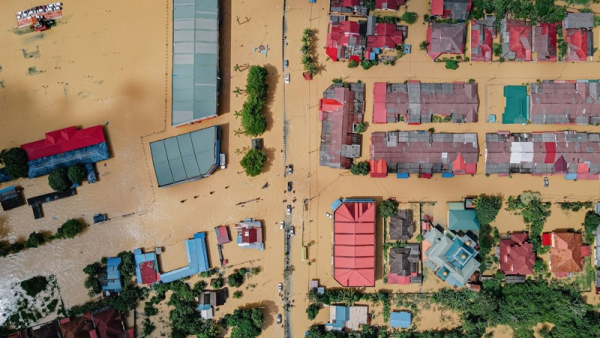
Globally, 70% of Average Annual Losses (AAL) are attributed to climatic hazards - rising temperature extremes, increased flooding, and water scarcity and security - marking a significant impact on urban areas. Notably, flooding has been the most prominent disaster, accounting for 44% of total reported events over the last two decades, with 81% of urban settlements being prone to floods globally (CDRI, 2023). According to the World Economic Forum (2022), flooding has been identified as the most common natural hazard across more than 1600 cities in the world. Moreover, water scarcity in cities is a critical crisis driven by rapid urbanization, over-extraction of groundwater, climate-induced erratic rainfall, and inadequate infrastructure. The adverse impacts of disasters and climate change are felt most acutely in cities. In the light of increasing climate hazards and their impact on infrastructure, the imperative to adapt urban infrastructure for risk reduction cannot be overstated. The inaction on resilient infrastructure could cost cities US$ 314 billion annually by 2030 (World Bank Group, 2016).
CDRI, in partnership with Ministry of Infrastructure and Water Management of Government of the Netherlands and Deltares, along with African Union Commission (AUC), National Disaster Management Authority (NDMA), India and ICLEI South Asia, is organising a three-part webinar series on Urban Water Infrastructure Resilience (UWIR). The webinar series will highlight the key aspects of building resilience of urban water infrastructure systems to manage floods and water scarcity in Africa and South Asia.
The webinars include the following topics:
- Introduction to urban water infrastructure resilience and an overview of the four modules.
- Module 1: Risk Assessment for infrastructure resilience and urban development.
- Module 2: Nature-based Solutions (NbS) for urban resilience — their benefits, integration with traditional systems, and lessons from global case studies.
- Module 3: Multi-level Governance for water-resilient cities — aligning disaster and climate risk management with water governance.
- Module 4: Sustainable Finance for resilient urban water systems — exploring best practices, strategies, and challenges.
The third webinar in the series will cover the topics - Multi-level Governance and Sustainable Finance. The first part of this webinar will provide participants with an understanding of governance frameworks for urban water resilience and the importance of adopting a holistic approach that aligns water resource management with disaster risk reduction and climate adaptation objectives. Participants will explore whole-of-government and whole-of-society approaches that promote coordinated action across different levels of government and stakeholder groups. Through practical exercises and case-based discussions, the session will demonstrate how integrated governance strategies can be applied in practice, with a particular focus on citizen engagement, stakeholder participation, and fostering a sense of ownership in resilience-building efforts.
The second part of this webinar will introduce participants to the role of sustainable finance in strengthening urban water infrastructure resilience and ensuring that investments are both climate-resilient and financially sustainable. Participants will explore key financing challenges and opportunities, understand the importance of integrating resilience into performance metrics and planning processes, and examine a range of traditional and innovative financing instruments. Through practical case studies, the session will highlight approaches for mobilizing and scaling investments, leveraging public, private, and international finance, and embedding resilience within urban planning and financial decision-making.
Participants are also encouraged to undertake the online self-paced e-Learning Course on Urban Water Infrastructure Resilience available on the DRI Connect Platform. Designed for a broad global audience, the course is free of cost and offers accessible, easy-to-comprehend content along with evaluation quizzes that builds foundational understanding on the topics of risk assessment, nature-based solutions, multi-level governance, and sustainable finance.
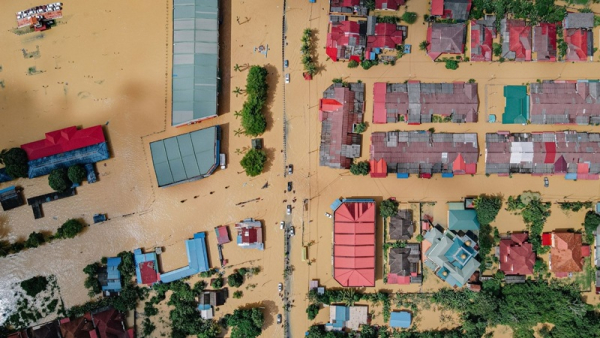
Globally, 70% of Average Annual Losses (AAL) are attributed to climatic hazards - rising temperature extremes, increased flooding, and water scarcity and security - marking a significant impact on urban areas. Notably, flooding has been the most prominent disaster, accounting for 44% of total reported events over the last two decades, with 81% of urban settlements being prone to floods globally (CDRI, 2023). According to the World Economic Forum (2022), flooding has been identified as the most common natural hazard across more than 1600 cities in the world. Moreover, water scarcity in cities is a critical crisis driven by rapid urbanization, over-extraction of groundwater, climate-induced erratic rainfall, and inadequate infrastructure. The adverse impacts of disasters and climate change are felt most acutely in cities. In the light of increasing climate hazards and their impact on infrastructure, the imperative to adapt urban infrastructure for risk reduction cannot be overstated. The inaction on resilient infrastructure could cost cities US$ 314 billion annually by 2030 (World Bank Group, 2016).
CDRI, in partnership with Ministry of Infrastructure and Water Management of Government of the Netherlands and Deltares, along with African Union Commission (AUC), National Disaster Management Authority (NDMA), India and ICLEI South Asia, is organising a three-part webinar series on Urban Water Infrastructure Resilience (UWIR). The webinar series will highlight the key aspects of building resilience of urban water infrastructure systems to manage floods and water scarcity in Africa and South Asia.
The webinars include the following topics:
- Introduction to urban water infrastructure resilience and an overview of the four modules.
- Module 1: Risk Assessment for infrastructure resilience and urban development.
- Module 2: Nature-based Solutions (NbS) for urban resilience — their benefits, integration with traditional systems, and lessons from global case studies.
- Module 3: Multi-level Governance for water-resilient cities — aligning disaster and climate risk management with water governance.
- Module 4: Sustainable Finance for resilient urban water systems — exploring best practices, strategies, and challenges.
The third webinar in the series will cover the topics - Multi-level Governance and Sustainable Finance. The first part of this webinar will provide participants with an understanding of governance frameworks for urban water resilience and the importance of adopting a holistic approach that aligns water resource management with disaster risk reduction and climate adaptation objectives. Participants will explore whole-of-government and whole-of-society approaches that promote coordinated action across different levels of government and stakeholder groups. Through practical exercises and case-based discussions, the session will demonstrate how integrated governance strategies can be applied in practice, with a particular focus on citizen engagement, stakeholder participation, and fostering a sense of ownership in resilience-building efforts.
The second part of this webinar will introduce participants to the role of sustainable finance in strengthening urban water infrastructure resilience and ensuring that investments are both climate-resilient and financially sustainable. Participants will explore key financing challenges and opportunities, understand the importance of integrating resilience into performance metrics and planning processes, and examine a range of traditional and innovative financing instruments. Through practical case studies, the session will highlight approaches for mobilizing and scaling investments, leveraging public, private, and international finance, and embedding resilience within urban planning and financial decision-making.
Participants are also encouraged to undertake the online self-paced e-Learning Course on Urban Water Infrastructure Resilience available on the DRI Connect Platform. Designed for a broad global audience, the course is free of cost and offers accessible, easy-to-comprehend content along with evaluation quizzes that builds foundational understanding on the topics of risk assessment, nature-based solutions, multi-level governance, and sustainable finance.
See Less




 July 31, 2026, 4:30 pm
 254 Enrolled




 July 31, 2026, 4:30 pm
 254 Enrolled