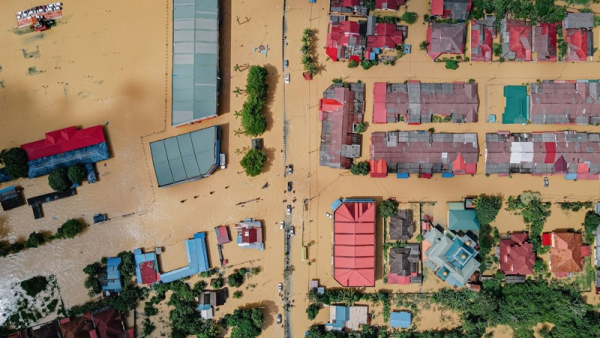
Globally, 70% of Average Annual Losses (AAL) are attributed to climatic hazards - rising temperature extremes, increased flooding, and water scarcity and security - marking a significant impact on urban areas. Notably, flooding has been the most prominent disaster, accounting for 44% of total reported events over the last two decades, with 81% of urban settlements being prone to floods globally (CDRI, 2023). According to the World Economic Forum (2022), flooding has been identified as the most common natural hazard across more than 1600 cities in the world. Moreover, water scarcity in cities is a critical crisis driven by rapid urbanization, over-extraction of groundwater, climate-induced erratic rainfall, and inadequate infrastructure. The adverse impacts of disasters and climate change are felt most acutely in cities. In the light of increasing climate hazards and their impact on infrastructure, the imperative to adapt urban infrastructure for risk reduction cannot be overstated. The inaction on resilient infrastructure could cost cities US$ 314 billion annually by 2030 (World Bank Group, 2016).
CDRI, in partnership with Ministry of Infrastructure and Water Management of Government of the Netherlands and Deltares, along with African Union Commission (AUC), National Disaster Management Authority (NDMA), India and ICLEI South Asia, is organising a three-part webinar series on Urban Water Infrastructure Resilience (UWIR). The webinar series will highlight the key aspects of building resilience of urban water infrastructure systems to manage floods and water scarcity in Africa and South Asia.
The webinars include the following topics:
- Introduction to urban water infrastructure resilience and an overview of the four modules.
- Module 1: Risk Assessment for infrastructure resilience and urban development.
- Module 2: Nature-based Solutions (NbS) for urban resilience — their benefits, integration with traditional systems, and lessons from global case studies.
- Module 3: Multi-level Governance for water-resilient cities — aligning disaster and climate risk management with water governance.
- Module 4: Sustainable Finance for resilient urban water systems — exploring best practices, strategies, and challenges.
The first webinar in the series will provide an introduction to CDRI’s Urban Water Infrastructure Resilience (UWIR) initiative and feature a high-level panel discussion with representatives from key partner organisations. The session will set the context by introducing the fundamental concepts of urban water infrastructure resilience and highlighting the importance of strengthening resilience in the face of growing climate and disaster risks. It will also provide an overview of the four thematic areas that underpin the initiative—risk assessment, nature-based solutions, multi-level governance, and sustainable finance—laying the foundation for the more detailed technical discussions in the subsequent webinars.
Participants are also encouraged to undertake the online self-paced e-Learning Course on Urban Water Infrastructure Resilience available on the DRI Connect Platform. Designed for a broad global audience, the course is free of cost and offers accessible, easy-to-comprehend content along with evaluation quizzes that builds foundational understanding on the topics of risk assessment, nature-based solutions, multi-level governance, and sustainable finance.
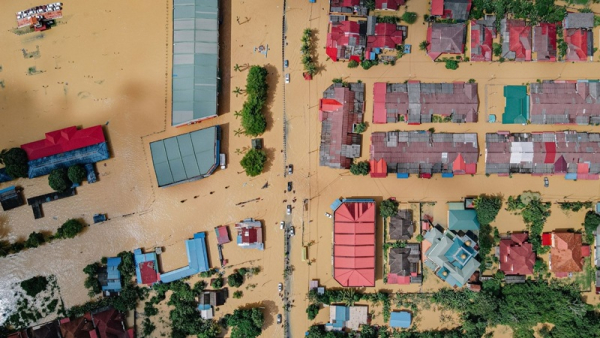
Globally, 70% of Average Annual Losses (AAL) are attributed to climatic hazards - rising temperature extremes, increased flooding, and water scarcity and security - marking a significant impact on urban areas. Notably, flooding has been the most prominent disaster, accounting for 44% of total reported events over the last two decades, with 81% of urban settlements being prone to floods globally (CDRI, 2023). According to the World Economic Forum (2022), flooding has been identified as the most common natural hazard across more than 1600 cities in the world. Moreover, water scarcity in cities is a critical crisis driven by rapid urbanization, over-extraction of groundwater, climate-induced erratic rainfall, and inadequate infrastructure. The adverse impacts of disasters and climate change are felt most acutely in cities. In the light of increasing climate hazards and their impact on infrastructure, the imperative to adapt urban infrastructure for risk reduction cannot be overstated. The inaction on resilient infrastructure could cost cities US$ 314 billion annually by 2030 (World Bank Group, 2016).
CDRI, in partnership with Ministry of Infrastructure and Water Management of Government of the Netherlands and Deltares, along with African Union Commission (AUC), National Disaster Management Authority (NDMA), India and ICLEI South Asia, is organising a three-part webinar series on Urban Water Infrastructure Resilience (UWIR). The webinar series will highlight the key aspects of building resilience of urban water infrastructure systems to manage floods and water scarcity in Africa and South Asia.
The webinars include the following topics:
- Introduction to urban water infrastructure resilience and an overview of the four modules.
- Module 1: Risk Assessment for infrastructure resilience and urban development.
- Module 2: Nature-based Solutions (NbS) for urban resilience — their benefits, integration with traditional systems, and lessons from global case studies.
- Module 3: Multi-level Governance for water-resilient cities — aligning disaster and climate risk management with water governance.
- Module 4: Sustainable Finance for resilient urban water systems — exploring best practices, strategies, and challenges.
The first webinar in the series will provide an introduction to CDRI’s Urban Water Infrastructure Resilience (UWIR) initiative and feature a high-level panel discussion with representatives from key partner organisations. The session will set the context by introducing the fundamental concepts of urban water infrastructure resilience and highlighting the importance of strengthening resilience in the face of growing climate and disaster risks. It will also provide an overview of the four thematic areas that underpin the initiative—risk assessment, nature-based solutions, multi-level governance, and sustainable finance—laying the foundation for the more detailed technical discussions in the subsequent webinars.
Participants are also encouraged to undertake the online self-paced e-Learning Course on Urban Water Infrastructure Resilience available on the DRI Connect Platform. Designed for a broad global audience, the course is free of cost and offers accessible, easy-to-comprehend content along with evaluation quizzes that builds foundational understanding on the topics of risk assessment, nature-based solutions, multi-level governance, and sustainable finance.
See Less




 July 15, 2026, 4:30 pm
 269 Enrolled




 July 31, 2026, 4:30 pm
 254 Enrolled