


 |
Disaster resilient infrastructure is typically associated with building stronger infrastructure: good engineering design, better technical standards, more robust power systems, better drainage. But true resilience, the 2025 Global Infrastructure Resilience (GIR25) report argues, is only partly a technical challenge. The response and recovery phases of infrastructure service delivery – maintaining service continuity of key assets during a crisis, restoring roads or power systems to minimize the impact on households and communities – are equally crucial. In these phases, the institutional and governance dimensions of Disaster risk reduction become much more visible. This insight is at the heart of the “three capacities framework” (absorb, respond and recover) for building resilience detailed in the GIR2025 report, and buttressed with numerous examples from case studies around the world. |
|
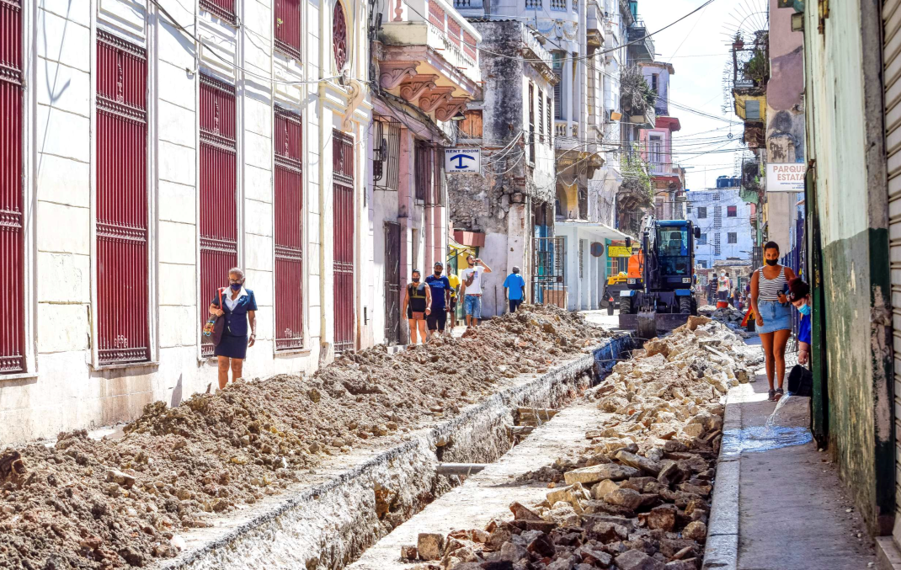
Construction and installation of new water pipes in Havana, Cuba Source: iStock |
|
|
Effective resilience, the report shows, is not a specialized activity with its locus in the work and mandates of disaster risk management (DRM) agencies, It is everybody’s business– and indeed everyday business. Governance is key to instilling and mainstreaming this message through coordinated actions on the ground. |
|
|
Good resilience starts with good service delivery When canals and manholes are not cleaned, bridges are not maintained, and infrastructure agencies lack information about the assets they manage, infrastructure services become less resilient. But an institution that cannot maintain reliable infrastructure in normal conditions – seen, for example, a poorly maintained road network, or intermittent water supply – will struggle even more during a disaster. Good service delivery, as a pre-disaster norm, will help build resilience. The resilience of infrastructure depends on an ecosystem of institutions Resilience is, at its core, the result of a series of interactions among diverse stakeholders in society — public agencies, private entities, communities and households — as well as the norms and decisions that define the reliability of infrastructure services. The quality of these interactions, or gaps between different actors or stages of resilience-building, must be addressed by policymakers. This “ecosystem of resilience” can be broken down into four groups of institutional actors that together determine the functional capacity of resilience in a system. Who plans and who pays for resilience: ministries of finance and planning determine what enters investment pipelines, how projects are appraised, what receives budget resources (including maintenance and reconstruction), and how disaster risks are incorporated into fiscal and investment decisions. Who sets and enforces the rules: legislators, regulators, code-setting bodies, and land-use authorities determine whether resilience is mandatory or merely aspirational. For example, over the past decade, Chile has moved disaster and climate-risk considerations into public investment evaluation, illustrating that resilience can be influenced upstream, before an asset is approved or constructed. The methodology is now a mandatory part of Chile’s National Investment System as of 2022, ensuring consistent application. Centralized tracking and performance monitoring reinforce implementation. Who prepares for and responds to disasters: : Infrastructure ministries, agencies, and utilities are at the core of disaster preparedness and response. They need to embed resilience in asset management, maintenance, and operating procedures; maintain emergency response and business continuity plans; and coordinate restoration with DRM agencies, emergency services, and other infrastructure providers. Infrastructure regulatory agencies (IRAs), which are distinct from the ministries and agencies that deliver services, can set service quality and reliability requirements; embed resilience into operating licenses, price-quality tariffs, and investment plans; enforce emergency preparedness standards; and ensure reporting and disclosure of risks across public and private providers. Disaster risk management plans need to be coordinated with land-use, territorial development, and national development plans, all of which should embed resilience. In addition, DRM agencies can develop institutional capacities in areas such as risk data and analytics, emergency operations and business continuity, and risk-informed planning at subnational level. Who delivers and uses resilient services: private operators, contractors, financiers, businesses, communities, and individual users are the core of critical actions to enhance infrastructure resilience and bear the consequences when services fail. The capacity of infrastructure agencies to build resilience in their assets and networks also depends on the private sector's capacity to provide resilience services and the steady development of capacities by professional associations. |
|
|
Infrastructure systems fail together A core tenet of effective resilience is recognizing the interdependence of infrastructure systems. Power supports telecommunications and water pumping; telecommunications support emergency response; roads enable repair crews, fuel, food, and medical access. Infrastructure agencies must also work with DRM agencies, hydromet agencies, emergency services, local governments, and other utilities before disasters—not meet one another for the first time during the emergency. Multi-sectoral resilience planning and strong intersectoral coordination are key to strengthening infrastructure governance. and prevent catastrophic cascading failures. Effective governance requires cross-sectoral coordination and preparatory action, such as:
For example, the Lifelines Council in New Zealand is an excellent OECD example to inspire developing countries. Legally recognized lifeline utilities and critical services collaborate around a shared vulnerability assessment and plan across electricity, transport, water, ports, telecommunications, fuel, and emergency logistics to maximize both resources and impact. The local level is where resilience becomes real National strategies may establish the framework for resilience, but local governments frequently manage and control roads, drainage, water systems, public buildings, land-use decisions, code enforcement, and local emergency coordination. Yet, despite being the tier of governance closest to the actual users of infrastructure, capacity, data, staffing, and financing constraints are often greatest here. they strengthen coordination with higher tiers of government to ensure transparent allocation and timely resource transfers. Municipal governments also tend to have more flexible learning and improvement cycles after disasters, allowing for institutional evolution that adapts to the new challenges posed by more intense disasters. Rather than creating new institutions targeting resilience, an increased focus on improving local governance can deliver significant wins for resilience. For example, the road network in Upper Egypt is particularly exposed to natural hazards, such as flooding and extreme heat. To address this, the Upper Egypt Resilient Road Transport Technical Assistance program strengthened existing governorate road departments, introduced road asset-management systems, and built officials' capacity in risk assessment, mitigation, and recovery. Conclusion: Four practical implications for improving governance for infrastructure resilience
To conclude, the degree of infrastructure systems’ resilience depends on how public institutions (from infrastructure agencies, finance and planning ministries, and regulators to disaster risk management, hydromet and emergency services, and subnational governments) and non-public stakeholders (from private operators, resilience service providers, and the insurance and financial sectors to businesses, communities, academia, and professional associations) manage the full life cycle of infrastructure, from planning and design to long-term upkeep, and on how the structures of authority, funding, and accountability among them shape their ability to prepare for and withstand future shocks. |
|
|
By: Ede Ijjasz-Vásquez, Coordinating Lead Author – Second Global Infrastructure Resilience Report, CDRI |
|
|
This blog forms part of a series under the ambit of CDRI’s second Global Infrastructure Resilience Report (GIR 2025). The main report, executive summary, and the corresponding working paper associated with this workstream are also available on CDRI's official website, at: https://cdri.world/resilience-dividend/global-infrastructure-resiliencereport-second-edition/ |
|
