
|
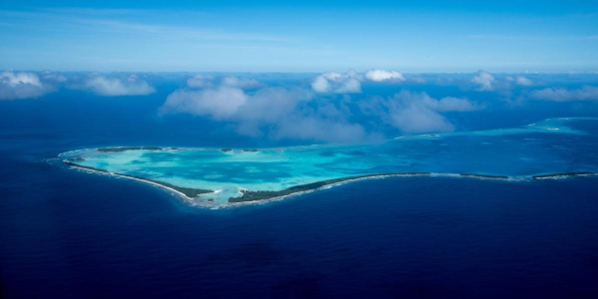
Photo Credit:ADB |
The atoll nations of the Indo Pacific—Kiribati, Maldives, the Republic of the Marshall Islands, and Tuvalu—confront some of the world’s most urgent adaptation challenges. With average elevations peaking at just two meters above sea level, projections indicate that a sea-level rise of 15 to 30 centimetres by 2050 is effectively "locked in," with levels potentially reaching up to one meter by 2100. This places critical infrastructure at existential risk[i]. These unique characteristics necessitate a decisive shift from incremental to transformational resilience. Infrastructure built today must be capable of functioning under dramatically different climate conditions in the coming decades. |
|
Consequently, traditional approaches to planning, maintenance, and financing are becoming increasingly inadequate for the long-term role that infrastructure must play in effective climate adaptation. This reality demands a fundamental rethink of critical infrastructure in atoll nations, as their challenges differ from those typically addressed across Small Island Developing States (SIDS). Atoll nations are defined by extreme geographic vulnerability and fragmentation. Infrastructure assets and essential services must be delivered across widely dispersed islands, with limited redundancy and long supply lines for fuel, materials, and maintenance. This geographic fragmentation increases exposure to disruption and raises the cost of resilient design, operations, and emergency response. The Republic of the Marshall Islands, for instance, spans 1.2 million square kilometres of ocean but holds only 181 square kilometres of land[ii], while Tuvalu comprises just 26 square kilometres of land scattered across 900,000 square kilometres of ocean. The Maldives faces a different but similarly acute risk profile, where population and services are highly concentrated in low-lying coastal zones: 44 percent of the population resides within 100 meters of the coastline and 41 percent is concentrated in Malé, intensifying the nation's exposure to climate hazards. This vulnerability is reinforced by reports indicating that 97 percent of islands in Maldives are experiencing shoreline erosion and 90 percent endure annual flooding from sea swells and storm surges[iii]. Such extreme fragmentation and exposure create unique logistical hurdles and high cost structures for material transport and asset maintenance. In atoll nations, resilience cannot be addressed through infrastructure upgrades alone. Infrastructure choices must align with national resilience pathways and sequencing decisions over time, including thresholds at which certain assets should be avoided, redesigned, relocated, or phased out to prevent locking countries into maladaptation. With no natural "higher ground" for retreat, investments must be planned against future operating conditions, not past baselines. This requires infrastructure that is risk-informed, flexible, and aligned with long-term adaptation transitions, so decisions taken today remain viable as climate conditions shift. As highlighted in the joint CDRI–ADB dialogue series, addressing the resilience gap requires leveraging existing frameworks as vehicles for coordinated, scalable action—moving from diagnostic exercises to implementation partnerships that overcome limited capacity and fragmentation. At the same time, this raises a critical question: while these frameworks provide an essential foundation, are they sufficient to address the scale, pace, and complexity of adaptation required in atoll nations, or do emerging risks necessitate the development of new, fit-for-purpose approaches? This knowledge series feeds into a wider programme of coordinated support, led by the four atoll countries and coordinated by ADB: the Triple-A (Accelerating Atoll Adaptation) Initiative [iv]. The initiative supports atoll nations in responding to escalating risks from sea-level rise, extreme weather events, and other environmental pressures by building long-term, system-wide resilience. A fundamental shift from a fragmented approach to holistically aid infrastructure resilience is essential—a necessity that has also been underscored in recent Conference of the Parties (COP) discussions. Tuvalu’s Long-Term Adaptation Plan (L-TAP) serves as the prototype for this approach[v]. By presenting its National Adaptation Plan (NAP) as a single investment prospectus rather than submitting piecemeal applications, Tuvalu is able to pool resources into a single sovereignty fund. This mechanism addresses multiple challenges simultaneously: it reduces administrative friction, ensures long-term liquidity, and allows for systemic rather than symptomatic treatment of climate risks. To overcome the "diseconomies of scale" inherent in small island nations, regional coordination must be leveraged. The Framework for Resilient Development in the Pacific (FRDP) offers a proven model for joint infrastructure projects that achieve economies of scale while respecting local contexts. Similarly, the proposed Regional Programmatic Approach to Climate Action (RPACA) serves as a model for coordinated support. This approach emphasizes value-for-money procurement tailored to the unique logistics of atoll nations, rather than applying standard commercial criteria that are often inappropriate for these isolated contexts. Implementation must be guided by the Pacific Quality Infrastructure Principles. These principles ensure that infrastructure is built to last, with maintenance planning and climate projections embedded from the design phase itself. Crucially, they drive economic benefits through local content—encouraging the use of local labour and developing local talent. This ensures that infrastructure investment generates positive social and economic value while adhering to strict environmental and social safeguards to prevent unsustainable debt burdens. The Pacific Islands Forum Secretariat identifies the mobilization of concessional finance and grants as a critical enabler. To bridge the financing gap, funding sources must be diversified through innovative mechanisms such as blue and green bonds, resilience funds, and risk pooling (including catastrophe insurance). These tools are vital for de-risking private sector investment. Finally, true resilience is not solely an engineering feat; it is a social endeavour. Infrastructure interventions are most sustainable when they blend modern design with traditional knowledge and are driven by local communities. Participatory approaches ensure that strategies are grounded in local realities and priorities. By combining traditional knowledge with engineered solutions, fostering community ownership alongside external support, and aligning local priorities with global partnerships, interventions become more relevant, effective, and sustainable. By pairing immediate fixes with a long-term vision, and by putting communities at the heart of the process, atoll nations can chart a path to resilient futures. Their experience offers lessons the world cannot afford to ignore. The choice before all infrastructure stakeholders, including development partners and governments, is no longer about if we should act, but how we choose to invest and act. The economic case is clear: inaction could cost atoll nations between 18 percent and 58 percent of Gross Domestic Product (GDP) by 2100. It is essential to pivot towards transformational adaptation[vi]. [i]NASA Earth Observatory. (2024, July 23). Funafuti Atoll, Tuvalu. https://science.nasa.gov/earth/earth-observatory/funafuti-atoll-tuvalu-153047/ [ii]Pacific Islands Ocean Observing System. (n.d.). Marshall Islands. Retrieved January 13, 2026, from https://www.pacioos.hawaii.edu/education/region-rmi/ [iii]IMF (2021, September). No higher ground. Finance & Development, 58(3). https://www.imf.org/en/publications/fandd/issues/2021/09/maldives-climate-change-aminath-shauna-trenches [iv]Asian Development Bank. https://www.adb.org/what-we-do/topics/climate-change/triple-a-initiative [v]Ocean & Climate Platform. (n.d.). L-TAP: Tuvalu's long-term adaptation plan. Retrieved January 15, 2026, from https://ocean-climate.org/en/l-tap-tuvalu-long-term-adaptation-plan/ [vi]Asian Development Bank. (2024, August 7). Rising seas: Building resilience against coastal flooding in Asia and the Pacific. Development Asia. https://development.asia/insight/rising-seas-building-resilience-against-coastal-flooding-asia-and-pacific |
|
|
By: ADB team: Alessio Giardino, Principal Climate Change Specialist - Climate Change and Sustainable Development Department, ADB; Erin LaCroix, Accelerating Atoll Adaptation (Triple-A) Initiative Program Manager, (Consultant), ADB; Macrina Mallari, TA Coordinator, (Consultant), ADB CDRI team: Avinash Venkata Adavikolanu, Specialist-Knowledge Management, CDRI; Kiran Gowda KS, Senior Specialist – Transport Sector Resilience, CDRI |
|
|
Disclaimer: The views and opinions expressed in this blog are those of the ADB and do not necessarily reflect those of the Coalition for Disaster Resilient Infrastructure (CDRI) |
|