


 |
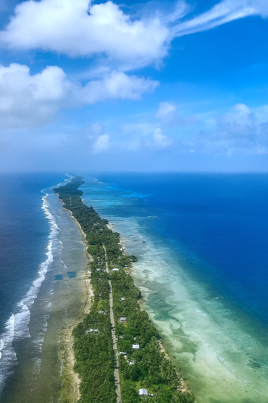
In the Republic of the Marshall Islands, the ocean shapes everyday life. Communities are spread across 29 atolls and five islands, where homes, roads, health facilities and other essential infrastructure are often located on narrow strips of land between the lagoon and the ocean. This geography makes communities particularly vulnerable to coastal flooding, erosion, high waves and sea-level rise. The country also faces other climate-related hazards[i] including extreme rainfall, strong winds, droughts and heatwaves, placing additional pressure on infrastructure, essential services and livelihoods. Over the years, the impacts have become increasingly evident. In 2014, severe coastal flooding associated with king tides displaced approximately 1,000 people and affected Tinak Clinic in Arno Atoll[ii]. More recently, in January 2024, a powerful storm surge affected nearly 20,000 people across 11 atolls[iii], damaging homes, schools and critical infrastructure. These events highlight the far-reaching consequences of coastal hazards disrupting lives and threatening access to essential services as flooding can render roads impassable, limiting communities’ ability to access healthcare and other critical services. But climate risks extend beyond infrastructure itself and as they intensify, a critical question arises: how can resilience planning respond to both coastal hazards and the needs of communities who depend on this infrastructure? |
|
Majuro Atoll Aerial View, Marshall Islands ©CDRI/ UNOPS |
|
This question was at the centre of the project on Roadmap for Health and Coastal Infrastructure Resilience in the Marshall Islands, developed by the Government of the Republic of the Marshall Islands with funding from the Coalition for Disaster Resilient Infrastructure’s Infrastructure Resilience Accelerator Fund (IRAF) and support from UNOPS.
Understanding Climate Risks through Local Experience
Through technical assessments, field visits and consultations in Majuro and Ebeye, the project combined technical evidence with the experiences of Government institutions, health workers and local stakeholders.
The assessments identified interconnected challenges, including coastal erosion, drainage and maintenance issues, and gaps in infrastructure information and asset management. These findings informed the development of a ‘Roadmap’ comprising six strategic priorities and 21 implementation pathways to guide future adaptation investments and institutional strengthening.
During the Roadmap launch, Secretary of the Ministry of Health and Human Services (MoHHS), Francyne Wase-Jacklick, reminded participants that the ultimate purpose of infrastructure investments is to protect people, adding: “But ultimately, we are protecting people. We are protecting the mum who needs to bring her children to the clinic. We are protecting the elderly who depend on regular medication.”
Her words reinforced the importance of resilient and accessible health facilities, particularly in neighbouring islands, where reliable power, water and communications are essential to maintaining healthcare services during emergencies.
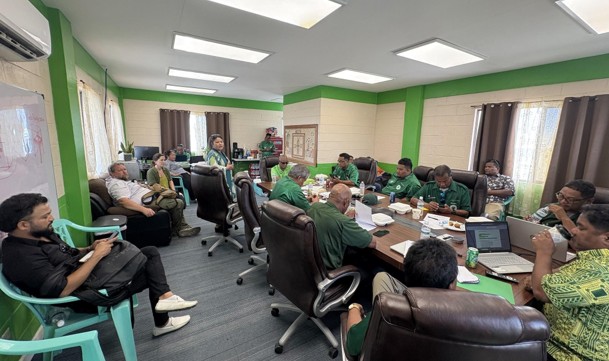
Consultations with Kwajalein Atoll Local Government, Kwajalein, Marshall Islands ©CDRI/UNOPS
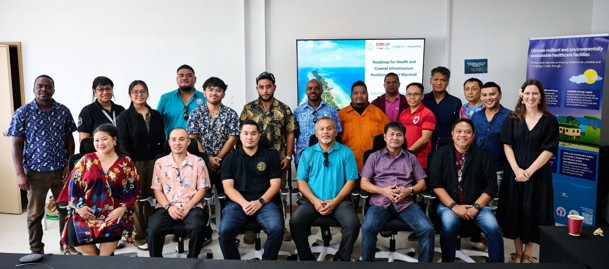
Roadmap Validation Workshop , Majuro, Marshall Islands ©CDRI/UNOPS
Strengthening Resilient and Inclusive Health Services
The human implications of climate risks were particularly evident during consultations at Majuro Hospital.
Hospital staff described that heavy rainfall floods parking and access areas, creating difficulties for patients, particularly women seeking maternity care. Discussions with the Rehabilitation Unit further highlighted accessibility and transport challenges faced by people with disabilities, especially during extreme weather events.
These experiences underscore that infrastructure resilience is not only about keeping buildings and facilities functional, but also ensure that people can safely and reliably access the services they need.
Planning for Coastal Resilience
Beyond health facilities, protecting coastal infrastructure has been equally important for maintaining essential services and supporting communities' livelihoods. During the project, assessments highlighted the risks that coastal erosion, flooding and wave overtopping pose to critical infrastructure across the Marshall Islands.
The Roadmap thus emphasized the need for locally appropriate coastal adaptation measures, including nature-based, engineered and hybrid solutions. By combining technical assessments with local knowledge and community priorities, future investments can better respond to site-specific risks while protecting communities, livelihoods and essential infrastructure.
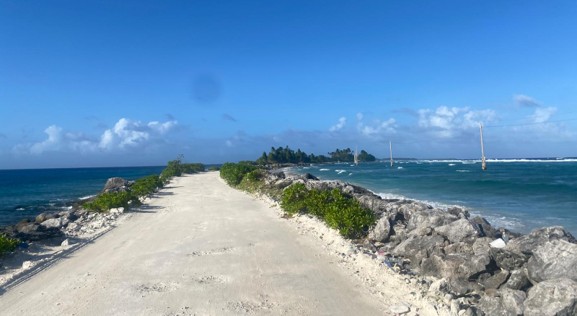
Ebaye Causeway, Kwajalein, Marshall Islands ©CDRI/UNOPS
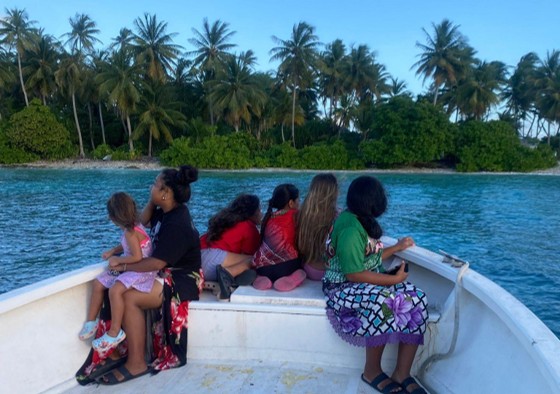
Kwajalein coastline, Kwajalein, Marshall Islands ©CDRI/UNOPS
From Local Knowledge to Stronger Institutions
Strengthening resilience also requires government institutions to have the knowledge, tools and capacity to translate evidence into practical action.
The Roadmap's six priorities address infrastructure maintenance and improved asset management, climate-resilient health facilities, hazard-informed decision support information systems, coastal adaptation through nature-based solutions, emergency preparedness and response, and road resilience. Together, they provide a framework for guiding future investments and strengthening institutional capacity, and improving coordination across government agencies.
As Secretary of the Ministry of Public Works, Infrastructure and Utilities (MPWIU), Walter Myazoe, emphasized during the Roadmap launch: “The important question now is what do we do with it?” He highlighted that success should be measured by “whether our infrastructure lasts longer, whether we make better investment decisions, whether our local capacity is improved, and whether our communities are better protected.”
For the Marshall Islands, living with the ocean has always been part of life. Translating local knowledge and technical evidence into action, guided by community needs and government leadership, will be essential to strengthening resilience in a changing climate.
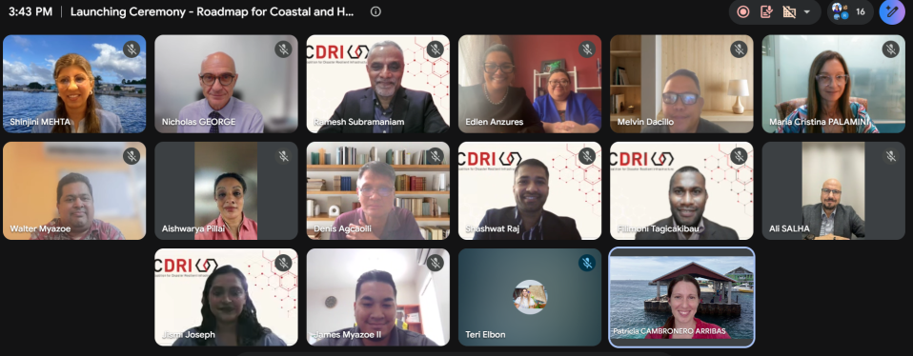
Launch Event Roadmap for Health and Coastal Infrastructure Resilience in the Marshall Islands, online ©CDRI/UNOPS
[i] The World Bank Group, Climate Risk Country Profile: Marshall Islands, World Bank, 2021.
[ii] ReliefWeb, ‘Marshall Islands/Kiribati: King Tides - Mar 2014’, https://reliefweb.int/disaster/ss2014-000032-mhl
[iii] Center for Excellence in Disaster Management & Humanitarian Assistance, Republic of the Marshall Islands Disaster Management Reference Handbook, CFE-DMHA, June 2026, pp. 22-24.
By
Patricia Cambronero Arribas, Project Manager, UNOPS; Yadhu Raj Acharya, Partnerships and Communications Officer, UNOPS
UNOPS extends its gratitude to the Governments of India, Australia, and the United Kingdom, and to the European Union, for their financial support through the Coalition for Disaster Resilient Infrastructure's Infrastructure Resilience Accelerator Fund (CDRI IRAF).
