




 |
Africa faces a triple challenge in infrastructure services today, exacerbated by the escalating impacts of climate change. First, with a rapidly growing population and rapid urbanization—Sub-Saharan Africa is urbanizing at 4.4 percent every year—there is insufficient coverage of these services to the population and businesses. Second, not only are infrastructure gaps substantial, but existing infrastructure assets vary enormously in quality, with many lacking adequate resilience standards. This makes them highly vulnerable to disasters. And third, such events leave African economies with enormous reconstruction needs. In 2023, the African Risk Capacity (ARC) reviewed the government expenditures and annual budget plans for 29 countries in Africa and found that they spent $2.2 billion on the response and recovery of weather-related disasters. |
|
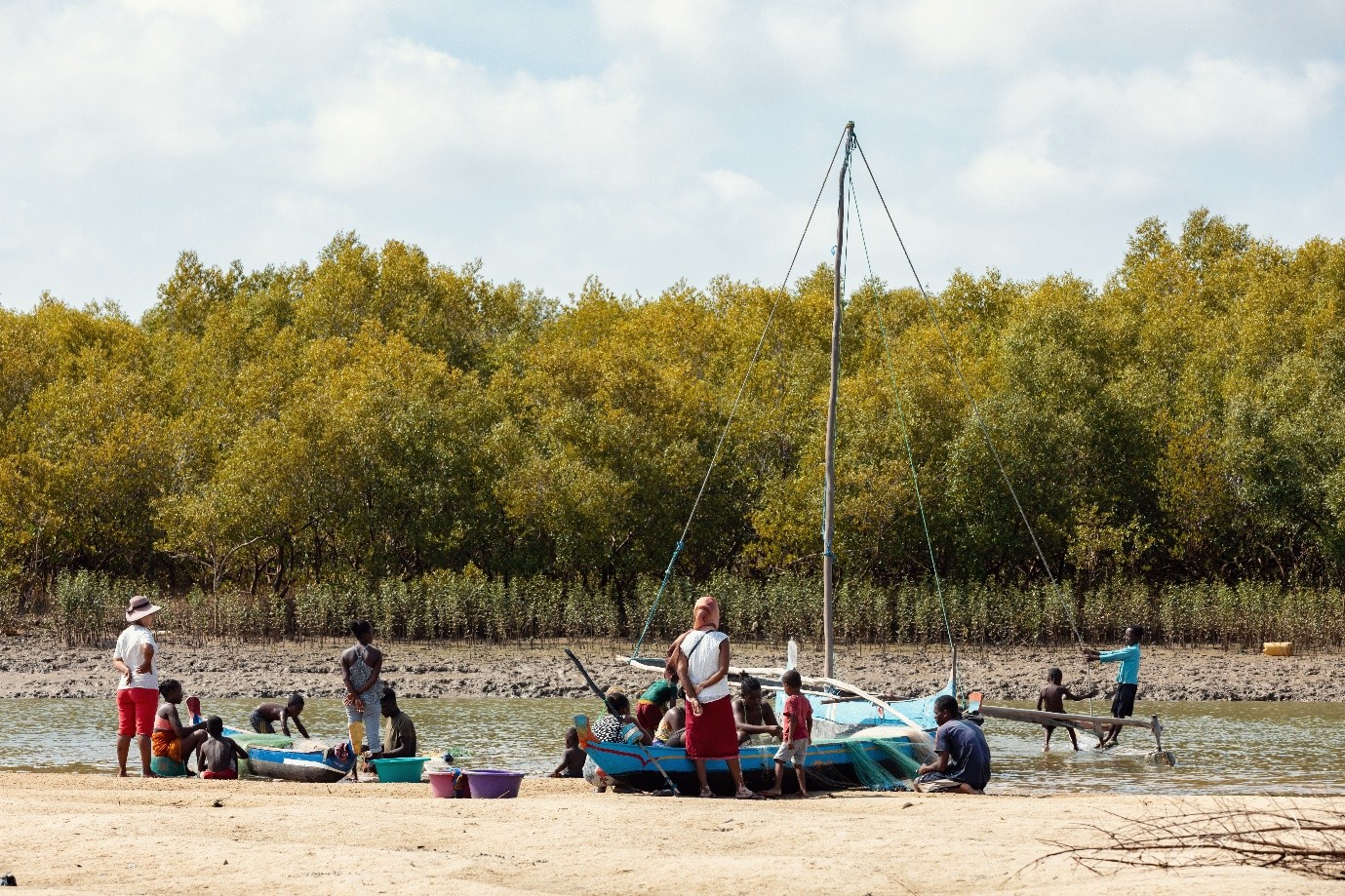
Local community members preparing a traditional pirogue boat on the sandy bank near mangroves in Nosy Kely, Morondava, Madagascar (Shutterstock) |
|
|
For the first time, in the GIR25 report, CDRI’s Global Infrastructure Risk and Resilience Index (GIRI) model has been used to conduct a comprehensive review of infrastructure risks in the Africa region due to disasters and climate change. This probabilistic model draws on leading global databases to assess risks from seven geological and climate-related hazards across nine key infrastructure sectors in Africa to estimate key financial indicators. Such metrics are invaluable in helping policymakers and infrastructure agencies evaluate the contingent liabilities that African countries may face year after year due to impacts of disasters and climate change on infrastructure. The GIR25 report shows that the average annual loss (AAL) of infrastructure and buildings damaged by disasters in Africa is $12.7 billion. In terms of infrastructure assets alone, Africa is estimated to lose, on average, $1.8 billion every year. Climate change is expected to increase this impact by as much as 27 percent, resulting in an AAL of $2.4 billion. |
|
|
Climate change is expected to increase the impact of disasters on infrastructure in Africa by as much as 27 percent, resulting in an average annual loss of $2.4 billion. |
|
|
|
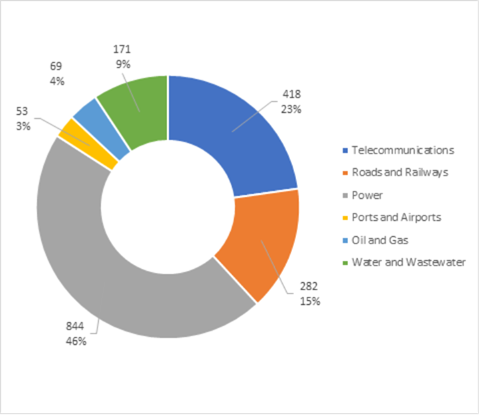
The GIR25 report shows that the average annual loss (AAL) of infrastructure and buildings damaged by disasters in Africa is $12.7 billion. In terms of infrastructure assets alone, Africa is estimated to lose, on average, $1.8 billion every year. Climate change is expected to increase this impact by as much as 27 percent, resulting in an AAL of $2.4 billion. The GIRI model also allows for more granular analysis by infrastructure sector, hazard, country, country income level, and even region. Among the infrastructure sectors, the estimated AAL of the power sector is the largest at 46 percent ($844 million), followed by telecommunications at 23 percent ($418 million) and roads and railways at 15 percent ($282 million). These are significant amounts estimated to be paid every year by African governments to repair and reconstruct damaged infrastructure, especially since the indirect economic impacts of such damage, as the report points out, are often orders of magnitude higher than the direct impacts. |
|
At the same time, Africa has several key advantages in enhancing the resilience of its infrastructure services. Since the majority of infrastructure assets in the region have yet to be built (approximately $80 billion is invested in infrastructure every year), it is more cost-effective to construct them with resilient standards than to retrofit or reconstruct them, as is the case in other regions. African governments are taking the lead in building resilience and adaptation in their economies. Their national budgets contribute 26 percent (about $ 2.2 billion) of total adaptation financing, and they are taking loans to channel an additional 54 percent. With the expected impacts of climate change already locked in for the next 20 years, these can only be addressed by improving resilience. Building resilience requires a difficult balancing act between building the capacities to absorb, recover from, and respond to disasters. The limited funds available for infrastructure in Africa, particularly when the enormous needs of expanding services are considered, do not allow for all four areas of resilience (building resilient new assets, maintenance and retrofitting of existing assets, and maintaining reserves for post-disaster reconstruction) to be fully covered. Therefore, decision makers in Africa need to consider a prioritization process based on risks and cost-benefit analyses. Methodologies such as GIRI, applied at the national or subnational level as in the GIR 2025 report, can help identify which critical areas of the country, links in the transport or electricity network, or assets in the inventory (such as specific schools or hospitals) represent priority areas for action. Infrastructure agencies should also prepare ahead of time for disasters through regular maintenance, preparedness planning, early warning systems, and alliances with the populations and businesses they serve. |
|
|
African governments are taking the lead in building resilience and adaptation in their economies. Their national budgets contribute 26 percent of total adaptation financing, and they are taking loans to channel an additional 54 percent. |
|
|
A suite of measures to improve resilience recommended by the GIR25 report includes the following recommendations:
|
|
|
To conclude, Africa can ill afford the losses projected by the expected impacts of climate change. Reducing the annual average infrastructure losses through well-calibrated and coordinated resilience action, and the consequent economic impact on businesses and communities, is the resilience dividend Africa can gain. |
|
|
By: Ede Ijjasz-Vásquez, Coordinating Lead Author – Second Global Infrastructure Resilience Report, CDRI |
|
|
This blog forms part of a series under the ambit of CDRI’s second Global Infrastructure Resilience Report (GIR 2025). The main report, executive summary, and the corresponding working paper associated with this workstream are also available on CDRI's official website, at: https://cdri.world/resilience-dividend/global-infrastructure-resiliencereport-second-edition/. |
|
