
 |
Although there is general agreement that investing in infrastructure resilience safeguards development gains from disasters and delivers long-term economic stability, mobilizing finance for resilience and harmonizing allocations optimally is not always easy. The Global Infrastructure Resilience 2023 (GIR23) report presents a comprehensive global analysis of the risks and estimated loss and damage of infrastructure assets due to a wide range of climate-related and geological disasters. The estimated global average annual loss is about $732 billion. These losses have important fiscal and debt implications for governments. For example, Dominica saw its public debt increase from 84 to 113 percent of GDP three years after 2017 Hurricane Maria. The debt-to-GDP ratio for Bangladesh is estimated to increase from 36.4% (in 2022) to as much as 39.2% after a 1-in-1000-year flood. |
| The University of Oxford estimates that floods in Thailand could downgrade sovereign credit ratings by up to four notches. The European Central Bank found that, among 124 countries studied, those that are subject to more frequent disasters have lower credit ratings. Strengthening the resilience of infrastructure can have significant benefits for the fiscal position and debt of countries.
The GIR25 offers a practical framework and good global experiences on how infrastructure agencies, asset owners and managers, and governments can mobilize finance to improve the resilience of existing and new infrastructure, while arranging contingent capital to respond to and recover from disasters. Today, most disaster finance flows are centred on the construction of new assets and on the response and recovery phases rather than on risk reduction. The GIR25 proposes five recommendations for infrastructure agencies to mobilize and use, as cost-effectively as possible, financial resources for resilience:
|
|
|
|
|
|
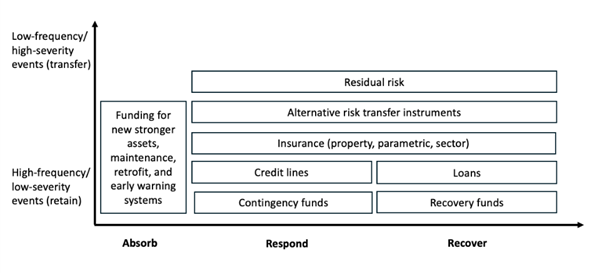
Figure 1. Layered landscape of infrastructure resilience financial instruments Note: Modified from Financial Protection Forum (2023). |
|
|
Financing for resilient infrastructure requires a balancing act between maintenance for resilience, retrofitting old infrastructure, building stronger new assets, and completing rapid response and reconstruction of assets damaged by disasters. |
|
|
|
|
As much as national governments, infrastructure agencies need well-defined financing mechanisms in a way that reflects their asset and risk structure. |
|
|
In conclusion, financing for resilient infrastructure requires a balancing act between maintenance for resilience, retrofitting, enhancing locally appropriate standards, and rapid response and recovery. A country can truly deliver resilience at scale by adopting a layered approach to disaster risk financing using a diversified set of complementary tools adapted to local contexts. |
|
|
By: Alexandre Chavarot, Founder & Principal, Climate Finance 2050; Akaraseth Puranasamriddhi, DPhil Candidate in Climate Risks & Sustainable Finance, University of Oxford, United Kingdom); Neeha Mujeeb, Senior Programme Manager, Emerging Markets, Institutional Investors Group on Climate Change (IIGCC) |
|
|
This blog forms part of a series under the ambit of CDRI’s second Global Infrastructure Resilience Report (GIR 2025). The main report, executive summary, and the corresponding working paper associated with this workstream are also available on CDRI's official website, at: https://cdri.world/resilience-dividend/global-infrastructure-resiliencereport-second-edition/. |
|