




 |
Climate change is intensifying. Between 2006 and 2021, Guyana experienced 12 major droughts and floods, resulting in an estimated cumulative loss of approx. $450 million, underscoring the urgent need for disaster and climate resilient infrastructure, and investments, that address the evolving risks faced by communities across the country. Over the years, unpredictable and intense weather events such as heavy rainfall, prolonged dry spells, and saltwater intrusion (during extreme high tides) have added pressure on drainage and irrigation (D&I) systems. Yet, climate risks are not experienced equally. Factors such as geographic location, gender, age, disability, livelihood activities, and access to productive resources influence how individuals and communities prepare for, respond to, and recover from climate impacts. |
|
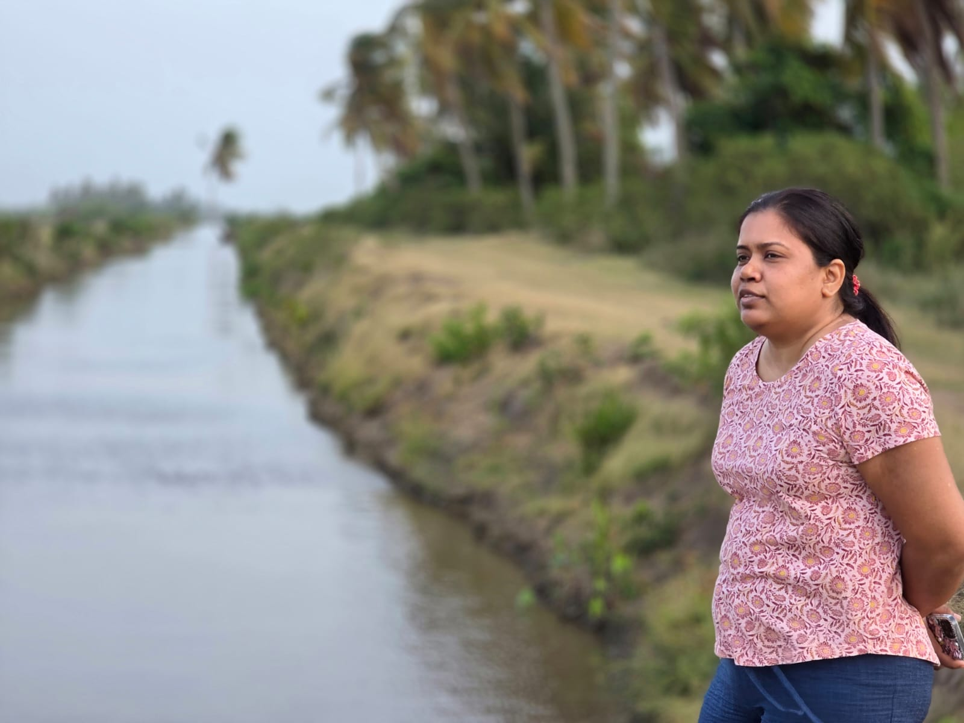
A woman farmer overlooks a canal that feeds water for approximately 500 acres of her rice land in East Berbice, Corentyne, Guyana Photo Credit: Vairaj Arjune |
|
|
Women-headed households, accounting for approx. 28 percent of households in Guyana, tend to face additional challenges during climate-related disasters. Women experience heightened vulnerability due to their reliance on natural resources for household and livelihood activities, as well as barriers related to mobility and access to services. Recognizing these differences is central to a Gender Equality, Disability, and Social Inclusion (GEDSI) approach. Moreover, by understanding the beneficiaries of D&I services, the ones facing barriers to participate, and the inclusion of diverse perspectives in planning and decision-making, Guyana can ensure more climate resilient investments that enhance infrastructure performance while improving outcomes for the people who depend on these systems. |
|
|
“Guyana's drainage and irrigation system is an interlocking network used by everyone,” says Christine Douglas, Monitoring and Evaluation Officer at the National Drainage and Irrigation Authority (NDIA). |
|
|
Developed through partnership between the Ministry of Agriculture, the Global Green Growth Institute (GGGI), and the Coalition for Disaster Resilient Infrastructure (CDRI), with funding from CDRI’s Infrastructure Resilience Accelerator Fund (IRAF), the D&I Strategy proposes a roadmap for strengthening Guyana’s climate-resilient D&I systems. Among priorities, it advances coordinated technical interventions, scaling innovative technologies, and promoting nature-based solutions to reduce flood risks and improve water management. The Strategy was informed by a GEDSI study and technical support from GGGI and CDRI, enabling the NDIA and partners to identify barriers, opportunities, and practical entry points for reinforcing inclusion across the D&I sector. GEDSI indicators were established to help embed inclusive approaches into longer-term D&I planning, governance, investment, and monitoring frameworks. The initiative recognizes that building more responsive, sustainable D&I systems also requires stronger institutions and governance, reliable data, and inclusive decision-making. Why GEDSI Matters in D&I Approximately 14 percent of Guyana’s population is engaged in agriculture[i], primarily through smallholder farming, with much of agricultural production concentrated along the low-lying coastal plain, where around 90 percent of the population resides. Coastal agriculture benefits from NDIA’s extensive network while some hinterland farming communities, including those scattered across vast savannahs, rely on rainfall and traditional water management practices. These different realities shape how communities experience D&I systems, agricultural opportunities, and climate-related challenges. |
|
|
“GEDSI has always been a part of NDIA’s work, just that it was not documented in a strategic way. With the development of Guyana’s National D&I Strategy, greater emphasis will be placed on integrating GEDSI into every aspect of NDIA’s work,” Douglas states. |
|
|
Understanding Barriers Through a GEDSI Lens The collaborative GEDSI work by NDIA, GGGI, and CDRI, produced valuable insights into how different groups interact with and benefit from the country’s D&I systems. This enabled NDIA to identify key stakeholder groups whose experiences require strategic consideration, while examining barriers that can limit equitable access, participation, and gains. These include:
|
|
|
“Because of the way the system is designed, water from the back lands, where much of our agricultural production takes place, passes through residential communities before being discharged into the Atlantic Ocean or major rivers through our primary drainage structures,” Douglas explains. “Therefore, the D&I system impacts livelihoods and affects everyone. The D&I system largely serves farmers through irrigation and effective drainage and ensures flood prevention for residential areas.” |
|
|
From Assessment to Action By supporting NDIA’s leadership and technical teams in applying a social inclusion lens to D&I planning, identifying key stakeholders, and developing practical recommendations, the recent initiative strengthens the Authority’s capacity to integrate GEDSI considerations into its planning, operations, and decision-making processes. These recommendations reinforce emphasis on strengthening stakeholder participation, improving institutional capacity, enhancing data systems, and ensuring social considerations are incorporated into future D&I investments. Recommendations include: Strengthen Inclusive Engagement Through Existing Community Structures: NDIA is encouraged to strengthen engagement through platforms such as Water Users’ Associations, Community Development Councils, and Neighbourhood Democratic Councils by increasing participation among women, youth, Indigenous representatives, and other underrepresented groups. Targeted outreach, accessible consultations, and capacity-building can help ensure diverse perspectives inform D&I approaches. Integrate Inclusive Approaches in Expanding D&I Services: As NDIA expands services into undeclared farming areas, applying inclusive planning and safeguarding measures can help ensure benefits reach smallholder farmers, indigenous communities, women farmers, and other users. Early community engagement can help identify local land uses, address tenure challenges, and ensure expansion plans reflect community needs. Enhance GEDSI Capacity Among D&I Staff: Building GEDSI awareness and capacity among technical and operational teams through targeted training can strengthen NDIA’s ability to identify social risks, engage stakeholders effectively, and design more equitable D&I investments. Improve Collection and Use of Disaggregated Data: Strengthening the collection and use of demographic-disaggregated data can position NDIA to better understand the beneficiaries from D&I investments and existing service gaps. Incorporating indicators related to women farmers, indigenous communities, and other stakeholder groups can support stronger planning, monitoring, and evidence-based decision-making. Integrate Social Considerations into Project Prioritization: Incorporating social and inclusion considerations alongside technical and economic criteria can help guide future D&I investments. Assessing service gaps, considering underserved groups, strengthening community partnerships, and promoting inclusive communication can ensure investments better respond to diverse needs and deliver stronger resilience outcomes. Toward a More Inclusive and Resilient D&I System Integrating GEDSI into Guyana’s National Drainage and Irrigation Strategy provides an opportunity to strengthen not only the physical resilience of these systems, but also the institutions, partnerships, and decision-making processes that support them. By improving participation, strengthening data systems, building institutional capacity, and incorporating social considerations into investment decisions, Guyana will be better positioned to advance a more inclusive approach to water management, that supports sustainable agriculture, protects livelihoods, and strengthens climate resilience for communities across the country. |
|
|
[i] Ministry of Agriculture, 2025. Agriculture Investment Prospectus 2024: Grow with Guyana. Ministry of Agriculture, Regent Street & Shiv Chanderpaul Drive, Georgetown, Guyana. [ii] GGGI, 2026. Integrating GESI into Drainage and Irrigation Planning: A Background Study to Inform NDIA’s Strategic Planning. Global Green Growth Institute. |
|
|
By: Dr Vairaj Arjune, National Adaptation Officer, Global Green Growth Institute; Yvonne Karen Barrow, Gender Equality Disability and Social Inclusion (GEDSI) Senior Associate, Global Green Growth Institute; Ravena Narisha Gildharie, Communication and Knowledge Sharing Senior Associate, Global Green Growth Institute; Mrs. Christine Douglas, Monitoring and Evaluation Officer, National Drainage and Irrigation Authority, Ministry of Agriculture |
|
|
We extend our gratitude to the Governments of India, Australia, and the United Kingdom, and to the European Union, for their financial support through the Coalition for Disaster Resilient Infrastructure's Infrastructure Resilience Accelerator Fund (CDRI IRAF). |
|
