


 |
In Fiji, and around the world, effective early warning is not simply about knowing a hazard is coming. It is about ensuring people receive the right information at the right time to make decisions that can protect lives, livelihoods and essential infrastructure. Before a cyclone arrives, a family may decide whether to move to a safer location, a farmer may be securing equipment and livestock, a fisherman may decide whether to return to shore, while a community leader may check on older people and families who may need assistance. Emergency responders may begin mobilizing resources, while telecom and other critical infrastructure teams begin work to keep essential services operating. |
|
Source: Live and Learn/ CDRI |
|
|
For Fiji, a country exposed to tropical cyclones, floods, drought, coastal hazards, earthquakes, tsunamis and other risks, effective early warning is critical, as the time between receiving a warning and experiencing its impacts makes a significant difference. |
|
|
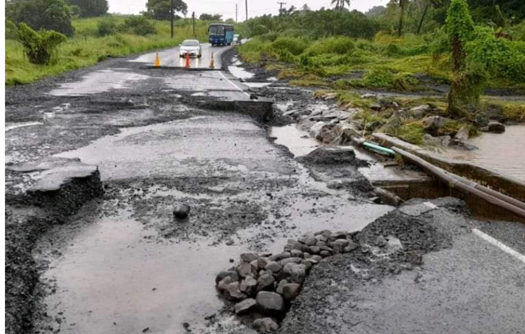
From Information to Action Fiji already has considerable expertise and experience in hazard monitoring and disaster management. The National Disaster Management Office (NDRMO), Fiji Meteorological Service, Ministry of Waterways and other government agencies play vital roles, alongside telecom operators, broadcasters, regulators, communities, development partners and technical organizations. Yet hazards can affect multiple systems simultaneously with cascading impacts. A cyclone can trigger floods and coastal inundation, while floods can damage roads, disrupt power and telecom infrastructure, where connectivity loss can delay warnings and limit authorities’ understanding of local conditions. |
|
|
Strengthening Fiji’s Multi-Hazard Early Warning System (MHEWS) is about connecting risk information, monitoring and forecasting, warning dissemination, preparedness and response into a coordinated system. |
|
|
As Salaseini Daunabuna, then Acting Permanent Secretary for Rural and Maritime Development and Disaster Management, said during Fiji's 2024 MHEWS discussions, a comprehensive multi-hazard early warning system is “Our defence against such adversities,” enabling the country to prepare, respond and mitigate the impacts of hazards. The challenge lies is turning that ambition into a system that works for everyone. |
|
|
Reaching the Last Mile The project Mapping, Assessing and Planning for Comprehensive Multi-Hazard Early Warning Capabilities in Fiji, supported through the Coalition for Disaster Resilient Infrastructure’s Infrastructure Resilience Accelerator Fund, assesses how Fiji's existing warning systems and communication capabilities connect—and identifies opportunities to strengthen those connections. The work examines the wider early warning ecosystem: from who generates warnings, how information moves between institutions, how it reaches communities, what infrastructure supports those communications, and how infrastructure risks can disrupt communication. Fiji has multiple channels through which warnings reach people, including radio, television, government platforms, and mobile networks. But access is not uniform. Project assessments have identified hundreds of underserved or unconnected communities, including areas where people may need to travel some distance to obtain reliable mobile connectivity. For communities in remote and vulnerable locations, early warning for the “last mile” remains a significant challenge. And reaching people is only part of the challenge. Warnings must be understandable, trusted, and measured by whether people know what to do next. During Fiji's 2026 national dialogue on MHEWS and the Common Alerting Protocol, Abduvakkos Abdurahmanov, UNDP Pacific Office Deputy Resident Representative, observed, “An early warning system is only as effective as the last person it reaches.” That means the success of an early warning system cannot be measured only by how quickly an alert is generated. It must also be measured by whether people understand it, trust it and know what to do next. |
|
|
Bringing the Warning Ecosystem Together As the project identifies opportunities to strengthen coordination across Fiji’s MHEWS, the Common Alerting Protocol (CAP) emerges as a key enabler. CAP provides a standardized way of structuring emergency alerts so that information can be distributed through different communication channels. However, it needs clear institutional responsibilities, agreed procedures, trained personnel, interoperable systems and communication channels that work together. At Fiji's 2026 national CAP workshop and dialogue, Minister for Rural and Maritime Development and Disaster Management, Hon. Mosese Bulitavu highlighted the need for “Effective, timely, and people-centred early warning systems.” Achieving this requires sustained collaboration across the ecosystem bringing together science, risk information, forecasting, technology, communications, institutions, infrastructure and, ultimately, communities. Gabrielle Emery of UNDRR captured the challenge particularly clearly during the same dialogue, “Early warnings are not going to result in anything if we do not bring this whole ecosystem together.” |
|
|
Protecting the Systems that Protect Us Early warning also depends on resilient infrastructure. The project has also considered vulnerabilities affecting critical communications assets, including cable landing stations and wireless infrastructure in areas exposed to hazards. This matters because communications are increasingly essential to disaster response. A damaged telecommunications site or international connectivity infrastructure, or loss of power can reduce the ability to disseminate warnings when they are needed most, and affect the ability of people to contact family members, emergency services or authorities in times of need. This creates a fundamental resilience principle: The infrastructure that carries the warning must itself be capable of withstanding the hazard. Strengthening MHEWS therefore requires strengthening the resilience of essential infrastructure. |
|
|
Resilience beyond Technology The project also explores nature-based approaches including mangroves, coastal vegetation, wetlands can contribute to resilience by helping reduce exposure to coastal hazards (coastal areas affected by erosion and flooding) while delivering wider environmental benefits. Together, these measures demonstrate that disaster resilience depends on a combination of measures: better risk information, stronger infrastructure, improved warning systems, preparedness planning and protection or restoration of natural coastal systems. |
|
|
Building Capacity that Lasts For Fiji, the MHEWS journey is therefore not simply about creating a new warning platform. As technology evolves, effective early warning depends equally on strong institutions, capacity and coordination. Effective early warning requires strengthening Fiji’s existing national ecosystem through skilled systems operators, clearly defined agency roles, prepared communities, risk-informed infrastructure operators, and lessons from disasters integrated into future planning. And the Government of Fiji, NDRMO, Fiji Meteorological Service, Ministry of Waterways, Live & Learn, telecom operators, broadcasters, regulators, technical specialists and development partners play distinct, complementary roles in strengthening the early warning ecosystem. |
|
|
A Lesson for the Pacific Fiji's experience offers lessons for other Pacific Island countries, many of which face shared challenges such as dispersed populations, remote communities, exposure to multiple hazards and dependence on infrastructure that can be difficult to repair after a disaster. While every country’s early warning system will differ, the underlying principles can be adapted to different national and local settings. A successful multi-hazard early warning system is not simply a collection of sensors, forecasts, communication platforms and alerts. It is a connected network of people, institutions, infrastructure, information and trust. Ultimately, its value lies in the time it creates:
For Fiji, strengthening MHEWS is about making that time more reliable, inclusive and actionable. Because the real measure of an early warning system is not how sophisticated it looks on a diagram, but what people are able to do before the storm arrives. |
|
|
By: John Cheer, Manager Engineering Standards and Quality, Telecom Fiji Ltd; Jowana Nabuci, Project Manager - Mapping, Assessing and Planning for comprehensive Multi Hazard Early Warning Capabilities, Live and Learn Fiji |
|
